Active Lifestyle
Movement, Meals, and the Weekly Pattern Between Them
Eleanor Whitfield
·
The organisation of a weekly food rhythm around what is actually growing in the ground at a given time of year is one of the less celebrated structural decisions in everyday nutrition. It is also, observationally, one of the more consequential ones for weight awareness and nutritional variety across the calendar.
From a strictly practical standpoint, aligning one's food choices with what is in season in England across a given month reduces both the reliance on processed food alternatives and the cognitive load of weekly planning. When the question shifts from "what should I eat this week?" to "what is available, fresh, and inexpensive right now?", the answer arrives with considerably less friction.
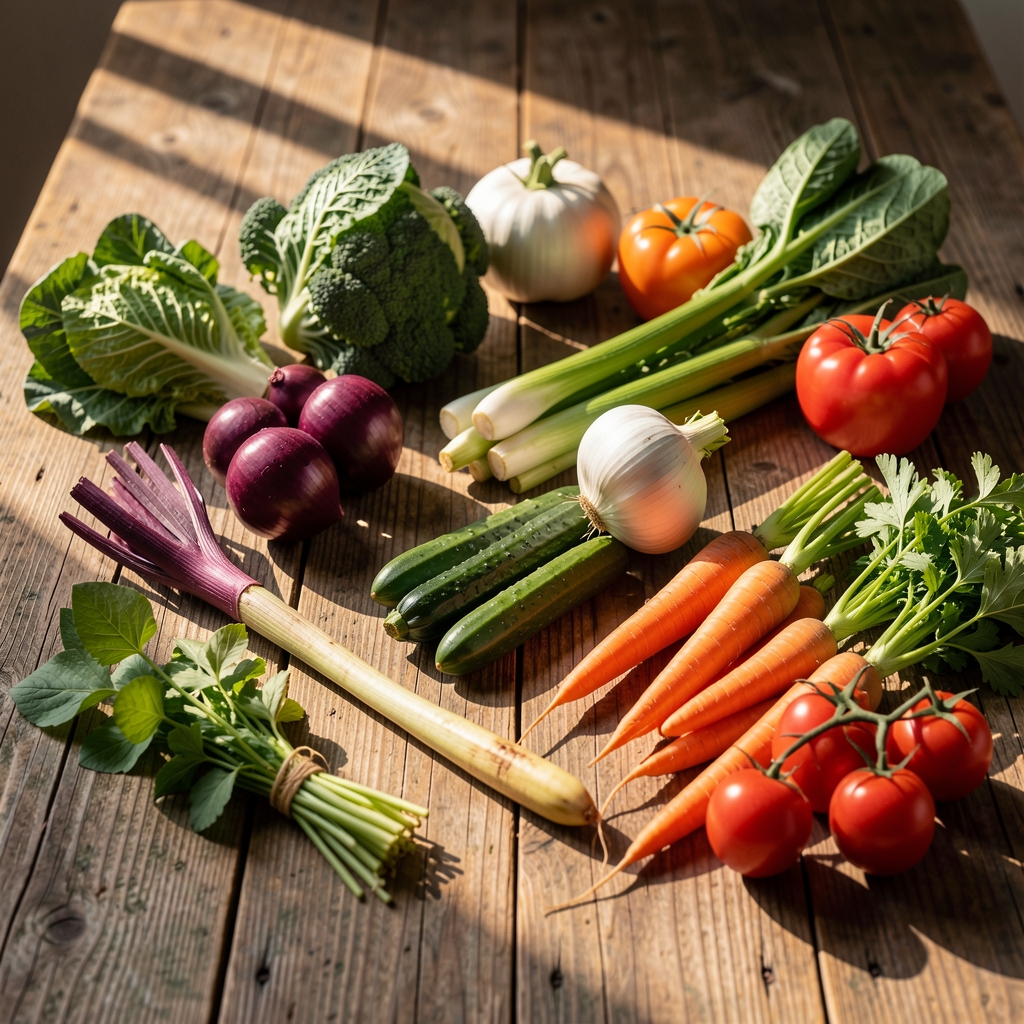
January in England yields leeks, parsnips, swede, celeriac, and a range of brassicas. These are not glamorous vegetables by any contemporary standard, yet each contributes to a notably high fibre intake, supports a sense of fullness between meals, and anchors a week's worth of home-cooked meals without recourse to imported alternatives whose nutritional profile deteriorates in transit.
The structural argument here is not romantic — it is logistical. A kitchen stocked with four or five currently-in-season vegetables presents a finite and navigable set of combinations. That constraint, counterintuitively, tends to produce more variety over time than an open-ended weekly shop where the same familiar choices re-emerge by habit regardless of the season.

Winter root selection — January 2026
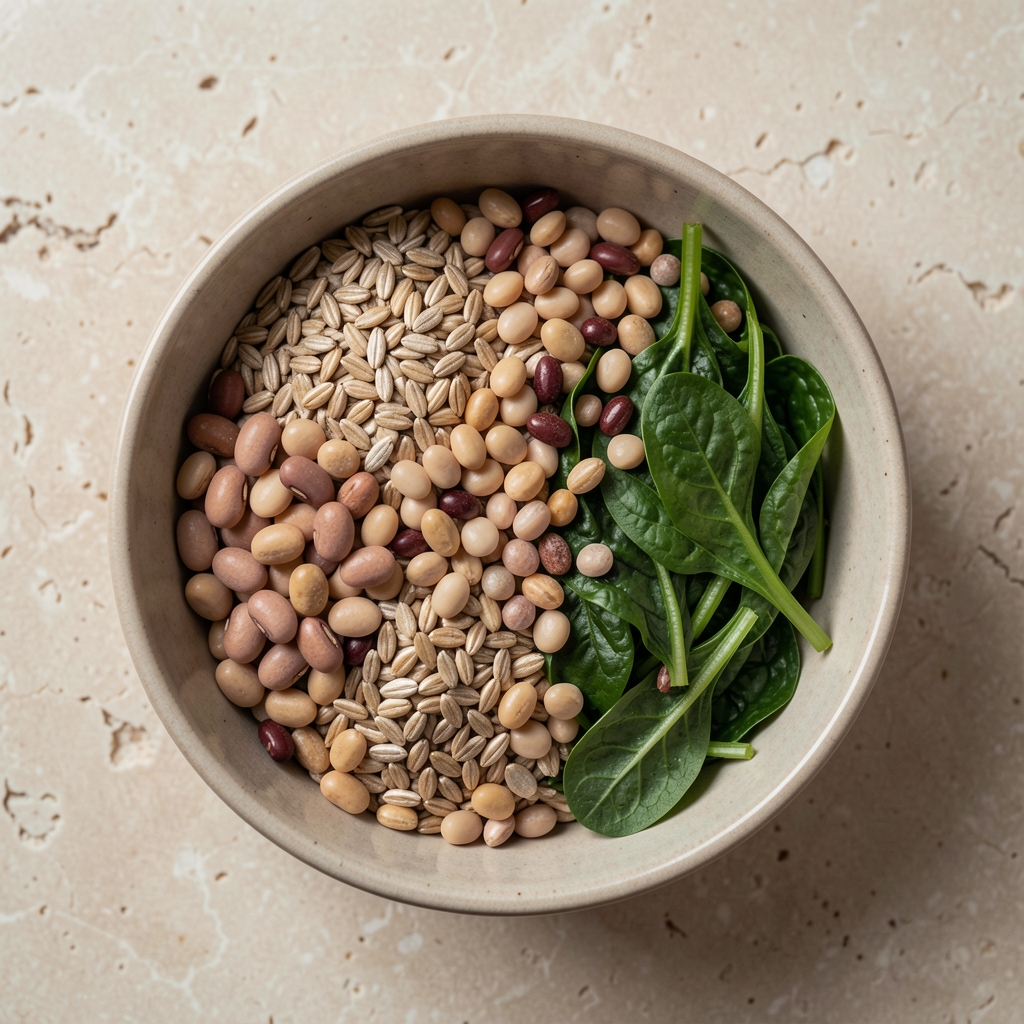
Portion awareness — the ability to observe how much of a given food type occupies the plate — shifts when seasonal produce constitutes the primary visual bulk of a meal. A bowl containing celeriac, leek, and barley demands a different intuitive assessment from one organised around pasta, sauce, and a side salad. The former's density and fibre content produce a physiological pattern of slower consumption and earlier satiety signalling.
This is not a statement about caloric restriction, which falls outside the editorial scope of this publication. It is an observation about how the composition of a plate — specifically, the proportion of seasonal whole vegetables relative to refined starches or processed ingredients — affects the experience of eating. Portion awareness is a skill developed over time, and the regular presence of high-volume, nutrient-dense vegetables on the plate trains that skill more effectively than most explicit nutritional directives.
Several contributors to Taldora Review have noted, in their own food journals, that weeks organised around seasonal produce tend to produce a more consistent energy pattern through the afternoon hours — the period most commonly cited in food-journalling accounts as vulnerable to unplanned snacking. The connection between the morning and midday meal and the afternoon energy curve is worth documenting carefully in one's own record before drawing conclusions, but the pattern is sufficiently recurrent to merit attention.
"The constraint of what is currently in season tends to produce more dietary variety over time than an entirely open weekly shop — a counterintuitive but well-documented pattern in nutrition field notes."
Weight and lifestyle changes, when they occur gradually and without deliberate intervention, tend to follow seasonal patterns that nutrition researchers have noted across population-level studies. The shift from the abundant soft fruit availability of summer to the denser, starchier produce of autumn corresponds, in many food journals, to a natural recalibration of meal composition and frequency.
From a nutritionist's perspective, the most useful frame for weight awareness is not the immediate reading on any given day but the pattern across a quarter or a season. Seasonal produce alignment supports this longer view: it structures the year into four distinct nutritional chapters, each with its own characteristic flavours, fibre sources, and cooking approaches. That structural variety, accumulated across twelve months, constitutes a meaningful whole-foods approach to weight and lifestyle that operates without the disruption of periodic restrictive protocols.
Spring brassicas arrive as the winter root phase concludes, bringing with them a shift in cooking methods — from slow-roasting and braising to lighter preparations. That shift is not merely culinary; it corresponds to changes in meal temperature, preparation time, and the kinds of additional ingredients that accompany the central vegetable. Each seasonal transition, approached as a structural reset of the weekly food rhythm, offers an opportunity to reassess portion composition and meal frequency without requiring an entirely new nutritional framework.
For readers operating within a London urban environment, seasonal produce alignment translates to a preference for independently operated market stalls, farmers' market attendance — Borough, Broadway, and Netil among the better-documented sources — and a selective approach to supermarket shopping that prioritises the seasonal vegetable section over convenience aisles.
The food journalling practice that accompanies this approach need not be elaborate. A weekly note recording which vegetables constituted the primary bulk of meals, how many home-cooked meals were prepared, and any observed patterns in energy or appetite provides sufficient data over four to six weeks to identify whether seasonal alignment is producing a discernible shift in nutritional balance.
The key metrics are simple: proportion of whole foods versus processed items, frequency of home cooking, and the presence of a seasonal vegetable at the majority of main meals. These three indicators, tracked with basic consistency over a full seasonal quarter, produce a reasonably comprehensive picture of one's nutritional balance and weight awareness without requiring specialist instruments or protocols.
Cooking frequency is closely correlated with both nutritional balance and weight awareness in published dietary research, and the seasonal produce approach has a structural effect on this variable. When one is committed to eating what is in season, the available produce demands a degree of preparation that pre-packaged alternatives do not. A celeriac cannot be eaten straight from the bag. A leek requires washing and chopping. These minor friction points function, in aggregate, as a consistent commitment to the home-cooking habit.
The connection between cooking and nutrition is not merely about ingredient quality. It is about familiarity — with one's own quantities, preferences, timing, and appetite signals. A person who cooks five main meals per week from seasonal ingredients accumulates, over a year, a body of practical nutritional knowledge that no amount of reading adequately substitutes for. That knowledge is the basis of a genuinely evidence-informed approach to one's own weight and lifestyle.
Health Content Notice
Articles published on Taldora Review are editorial in nature and reflect the writers' observations on everyday nutrition practices and weight awareness. The content is not intended as professional advice, nor as guidance for the management of any specific condition. Readers with specific concerns about their daily routines are encouraged to speak with a qualified wellness professional.

Eleanor Whitfield is the senior editor of Taldora Review, where she has documented nutrition patterns and food habits across seasonal cycles since the publication's founding. Her editorial focus centres on the practical intersection of food choices, portion awareness, and gradual weight change.
More from this author →